
Bridging Science, Industry and Sustainability through Innovation Week at UCTM
Climate Engine is proud to highlight a success story that demonstrates how university–industry collaboration can connect students with practical examples of sustainable innovation, green chemistry, and responsible product development.
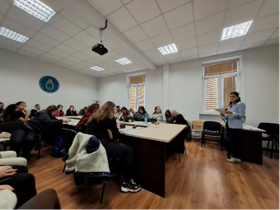
As part of Climate Engine Innovation Week at the University of Chemical Technology and Metallurgy (UCTM), the Virtual Laboratory for Climate Change and Technological Innovations organized the seminar “The Science Behind Change: Smart Chemistry for a Sustainable World.”
The event featured Boryana Cholakova, Project and Development Manager at Relina Ltd., who presented how the company applies sustainability principles in the development of innovative formulations for cosmetics and food supplements. The seminar provided participants with valuable insights into sustainable product development, green chemistry, and industrial innovation.
Following the seminar, an interactive workshop enabled students to engage directly with industry experts, discuss real-life challenges, and explore practical applications of sustainable chemistry in product development. The event attracted strong interest from students and academic staff and fostered meaningful dialogue between academia and industry.
Climate Engine’s Contribution
Climate Engine provided the framework for organizing Innovation Week activities aimed at strengthening cooperation between higher education institutions and industry.
Through the Virtual Laboratory for Climate Change and Technological Innovations, Climate Engine facilitated collaboration with Relina Ltd. and created opportunities for students to interact with professionals working on sustainability-driven innovation.
The project enabled the dissemination of practical knowledge on green chemistry, circular economy principles, and sustainable manufacturing. It also encouraged students to connect academic learning with real industrial applications, strengthening their understanding of how scientific knowledge can be transformed into innovative and environmentally responsible products.
Outcomes and Impact
The seminar successfully strengthened cooperation between academia and industry by demonstrating how sustainability principles can be translated into commercially relevant and environmentally responsible products.
The event engaged 24 participants, including students and academic staff. It increased student awareness of sustainable chemistry and innovation in the cosmetics and food supplement sectors, while providing practical exposure to industry-led approaches to product development.
The activity also strengthened collaboration between UCTM and Relina Ltd., creating opportunities for future joint educational and research initiatives. Active student participation in discussions and workshop activities promoted experiential learning, entrepreneurial thinking, and stronger engagement with real-world sustainability challenges.
At the institutional level, the seminar enhanced the visibility of the Climate Engine project and the Virtual Laboratory for Climate Change and Technological Innovations as facilitators of university–industry collaboration. It also promoted sustainable innovation and knowledge transfer within the university innovation ecosystem.
Advancing Sustainable Innovation through Practical Learning
This success story illustrates how Climate Engine supports the development of future professionals equipped to address climate and sustainability challenges through science, innovation, and industry engagement.
By connecting students with Relina Ltd. during Innovation Week, the project helped bridge academic knowledge and practical industrial experience. The event demonstrated how partnerships between universities and companies can accelerate sustainable product innovation, strengthen professional skills, and inspire students to contribute to the green transition.


Comments